
Choosing Materials That Age Beautifully
Timeless interiors are built around honest material choices: texture, durability, maintenance, and how surfaces change with use.
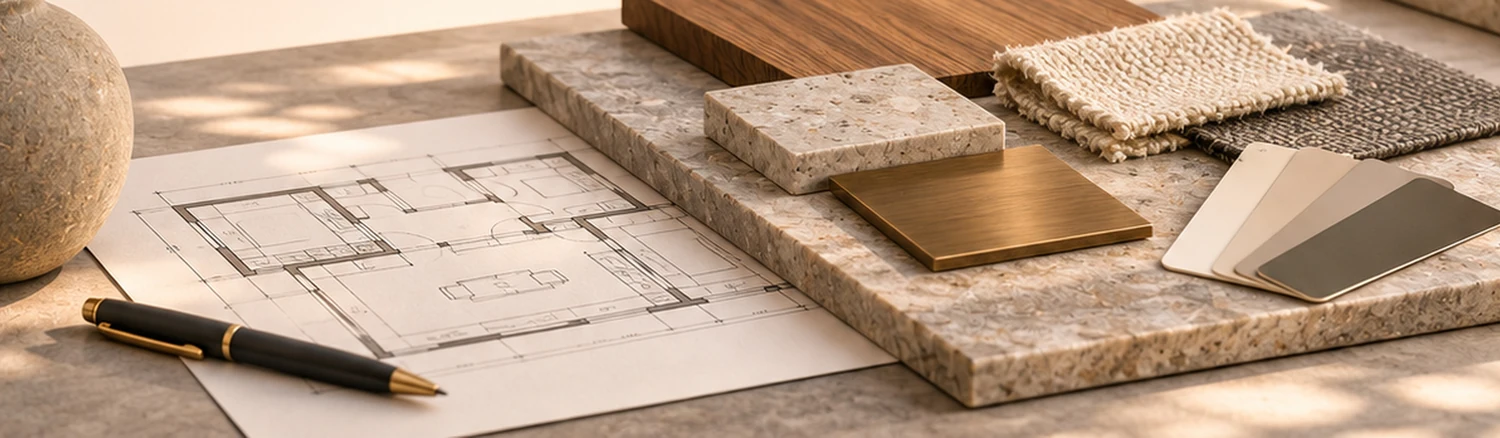
Beauty and performance belong together
A material can look compelling in a sample and behave very differently across an entire room. Consider how it feels to the touch, how it reflects light, what maintenance it needs, and how it responds to everyday wear. The right choice depends on the place it will be used, not on whether the surface is currently fashionable.
A countertop, a window seat, and a hallway floor have different demands. Asking the same finish to perform in all three situations can lead to unnecessary compromises.
Understand the character of wood
Natural wood adds warmth and variation. Grain direction, species, cut, and finish influence how calm or expressive it feels. Some woods darken with age; others may lighten or change tone with sunlight. Water, abrasion, and humidity can also leave traces over time.
Before selecting a timber finish, look at a large sample in the intended room and under several lighting conditions. Understand whether the final surface is solid wood, veneer, engineered material, or wood-look product: each has different strengths and maintenance considerations.
Stone should be selected for its setting
Natural stone offers depth and character, but different stones vary widely in porosity, hardness, and susceptibility to staining or etching. A polished surface can create one atmosphere; a honed or textured finish can feel entirely different. Neither is universally superior.
Ask the supplier about sealing, cleaning products, repairs, and the likely marks of daily use. For hard-working surfaces, practical performance can be as important as the visual pattern.
Let contrast create richness
A restrained material palette does not mean everything must match. Smooth plaster can be set against expressive timber. A quiet stone can make warm textiles feel even more inviting. The goal is to balance tactile qualities, reflection, and scale.
Often a few well-considered materials create more clarity than many competing finishes. Repeating a material in deliberate places can give different rooms a subtle connection.
Aging can be part of the design
Materials change. The question is whether those changes will feel welcome in the way the space is used. Some owners appreciate the patina of timber and natural stone; others prefer a surface that remains visually consistent with minimal attention.
Neither preference is wrong. A thoughtful design translates the owner's tolerance for maintenance, desire for warmth, and long-term plans into choices that feel appropriate years after installation.